Tuesday, October 22, 2019

Will new generations lead the way to plant-based eating?


I recently returned from a memorable visit to the campus of the University of Illinois in Champaign-Urbana, where our family lived when I was a member of the faculty. We participated in Homecoming Weekend festivities and had many conversations with undergraduate students.  I was impressed with their intellectual attainments, their energy, and purpose, their sense of where they were going in life. Most of the events we were attending involved food, from breakfast, lunch or dinner to hors d'oeuvres. There was a surprising amount of talk about food. Many students told me that they were vegetarian or—even more commonly—following a vegan diet.  A few said their dietary choices were prompted by health considerations, but more generally they expressed ethical concerns for the future of our nation and global society. I was encouraged by what I heard from these young people. Since returning home (we live in Florida),  I’ve been feeling that it may be time once again to reflect on the importance of moving to a plant-based diet.  So here are some thoughts, in part abstracted from Project Drawdown materials. (Be sure to watch Paul Hawken’s great presentation at this site.)

Much depends on making people aware that our dependence on meat as a major component of the Western diet comes at a steep price in terms of global emissions of greenhouse gases.  Present practices of industrial-scale livestock production account for somewhere between 15 percent and 50 percent of global emissions, primarily carbon dioxide and methane. Ruminants such as cows are the most prolific offenders, as they digest their food.  But that’s only part of the story. Agricultural land use and associated energy consumption to grow livestock feed also produce carbon dioxide emissions.  On a per-calorie of food produced basis, industrial livestock agriculture generates much larger emissions than vegetables, fruits, grains, and legumes. 

It’s actually much worse than it needs to be. According to the World Health Organization, only 10 to 15 percent of one’s daily calories need to come from protein, and a plant-based diet primarily can easily meet that threshold.  On average, adult males require about 56 grams of protein each day, and women about 46, but in the United States and Canada, the average adult consumes more than 90 grams of protein per day. Where plant-based protein is abundant, human beings do not need animal protein.  It’s interesting to compare the Protein Scorecards of various foods.  One sees that beans and whole grains are much more effective at delivering protein at lower greenhouse gas emissions. Vegetables generally score much higher than animal sources.

Vegetarians and vegans don’t need to sacrifice the pleasures of tasty food by switching away from animal-based protein. If you have concerns about changing your diet away from animal protein, there are many websites worth visiting.  One classic introduction is the film,“Forks over Knives”.  The Forks over Knives recipe website is great! Dr. Michael Greger’s  NutritionFacts.org is a treasure trove of references and good advice on diet and nutrition. The students I spoke with at Illinois were all well aware that one can eat well, in terms of both nutrition and pleasure.  A groundbreaking 2016 study from the University of Oxford modeled the climate, health, and economic benefits of a worldwide transition to plant-based diets between now and 2050. Business-as-usual emissions could be reduced by as much as 70 percent through adopting a vegan diet and 63 percent for a vegetarian diet (which includes cheese, milk, and eggs).  The potential health impact on millions of lives translates into trillions of dollars in savings: dietary shifts could be worth as much as 13 percent of the worldwide gross domestic product in 2050.

If western society and newly affluent societies worldwide could just become less piggish about their consumption of animal protein, that would be a major step in the right direction. A 2018 World Resources Institute report analyzes a variety of possible dietary modifications and finds that “ambitious animal protein reduction” — focused on reducing overconsumption of animal-based foods in regions where people devour more than 60 grams of protein and 2,500 calories per day — holds the greatest promise for ensuring a sustainable future for global food supply and the planet. “In a world that is on a course to demand more than 70 percent more food, nearly 80 percent more animal-based foods, and 95 percent more beef between 2006 and 2050,” its authors argue, altering meat consumption patterns is critical to achieving a host of global goals related to hunger, healthy lives, water management, terrestrial ecosystems, and, of course, climate change.

The case for a plant-based diet is robust. That said, bringing about substantial dietary change is not simple, because eating is profoundly personal and cultural. Meat is laden with meaning, blended into customs, and appealing to taste buds. Meat substitutes made from plants are one way to help shift established ways of cooking and eating.  They can mimic the flavor, texture, and aroma of animal protein and even replicate its amino acids, fats, carbohydrates, and trace minerals. With nutritious alternatives that appeal to meat-centric palates and practices, companies are actively leading that charge, proving that it is possible to swap out proteins in painless ways. Select plant-based alternatives such as those marketed by Beyond Meat and Impossible Foods are now in grocery meat shelves.  It’s a rapidly growing development in the food industry. Food columnists such as Mark Bittman, journalist and author of How to Cook Everything Vegetarian, and Yotam Ottolenghi, restaurateur and author of Plenty are helping introducing new dietary norms. And hey! If Tom Brady of the New England Patriots can eat vegetarian, why can’t the rest of us? 

A key step in reducing the impacts of animal husbandry on climate is ending price-distorting government subsidies of the U.S. livestock industry, so that the wholesale and resale prices of animal protein would more accurately reflect their true cost. It is not easy to get a grip on the total subsidies that undergird livestock production, but when all the various components of the enterprise are taken into account, it’s a heap of money.  Some critics of the present system have proposed levying taxes on meat production that reflect its social and environmental externalities. We’re a long way from that happening, but the social incentives for reducing the scope of industrial livestock production are clear: less contamination of municipal water resources, lower rates of chronic disease, less damage to freshwater resources and ecosystems — for example, smaller aquatic “dead zones” created by farm runoff. Plant-based diets also open opportunities to restore land now being used for livestock production to other, carbon-sequestering uses.

Global warming is putting pressure on humanity’s capacity to fend off disastrous changes in climate.  Figuring out how to feed a growing population is perhaps the most urgent. What is certain is that we can’t continue on the paths we’ve been following.  But we can’t make effective changes until people come to grips with the urgency of our situation, until they understand how corporate and political special interests work to maintain the status quo. There are many questions begging for answers.  For example, why are so many of the livestock operations in this country owned by, or supported by, Chinese interests? Is that in our national interest? More on that in a future blog.

In the meantime, what’s on your dinner menu? If it’s plant-based, tell your friends and family about it. Come on, people, let’s get together!


Wednesday, September 25, 2019

On not losing faith in climate action


The Department of the Interior’s Bureau of Land Management recently filed a final impact statement (EIS) related to oil and gas drilling in the Arctic National Wildlife Refuge (ANWR). Predictably, it doesn’t foresee that drilling will have substantial environmental effects on the Alaskan wildlife and environment.  Those would come largely downstream, in the form of burning of the extracted oil and gas. However, the EIS, more or less in spite of its natural inclinations, had quite a bit to say, buried near the back of the report, on the expected long-term effects of climate change on the Arctic ecology:  "The large magnitude of climate change effects, accompanied by increases in already high climate variability in the Arctic, are likely to overshadow smaller magnitude impacts of oil development. ... many species that nest on the refuge's coastal plain already are experiencing decreasing populations, and many could suffer catastrophic consequences from the effects of global climate change in one or more of their seasonal continental or even global habitats…”.   In short, extinction of species can be expected to occur on a massive scale as global warming marches on. Meanwhile, the Trump administration is finalizing regulations that could make it harder to protect wildlife at a time when scientists say the threats against it are growing.
Habitat loss continues apace, while climate change is predicted to increase pressure against species as temperatures climb. In the administration’s new-speak, plants and animals are considered threatened when they're at risk of becoming endangered "in the foreseeable future." The administration wants to limit what counts as “foreseeable future”, and only considers factors it deems "probable," according to its proposed changes to the Endangered Species Act. I could fill this entire blog with examples of the ways that barriers are being formed to listing species as endangered, slowing up the process to the point that the species may become extinct even before being acknowledged as endangered.  


In the prologue to his book, Half Earth: Our Planet’s Fight for Life, E. O. Wilson writes that our human sensory system and capacity for moral reasoning are deficient for the purposes of modern humanity:  “Like it or not, we remain a biological species in a biological world, wondrously well adapted to the conditions of the planet’s former living environment, albeit tragically not this environment or the one we are creating. In body and soul we are the children of the Holocene, the epoch that created us, yet far from well adapted to its successor, the Anthropocene.”  Wilson is a wise and learned man. Given what he knows about his fellow humans, and about the deep perils that face all the species on the planet, I admire his persistent efforts to enlighten and inspire the rest of us to action. But what actions? Greta Thunberg, and George Monbiot urge us in an excellent short video to PROTECT, RESTORE, FUND.  Yes! Let’s do those things! But most of us don’t know how.  We are, most of us, trapped in our wondrous adaptations to the rapidly disappearing Holocene.  


The physicist Gilbert N.Plass first made me aware of the influence of greenhouse gases on Earth's climate when  I heard him speak at Michigan State University in 1954.  Plass was one of the early pioneers of the modern movement to rigorously compute the effects of greenhouse gases on the planet’s surface temperature.  His work drew a fair amount of attention; Time magazine did a story on him in 1958. I became fascinated by what I learned from Plass, and over the years spent time away from my major research interests as a Chemistry Professor to delve into atmospheric sciences. I wrote about global warming in a short general audience type of book, Energy and the Environment, published in 1971, which received a modest level of use in special topics courses; spent a sabbatical leave at the International Meteorological Institute in Stockholm in 1972, during which time I attended the United Nations Conference on the Human Environment in Stockholm;  a discussion of “water vapor, carbon dioxide and climate” was included in the first edition of Chemistry: The Central Science, a general chemistry text I coauthored with H. Eugene LeMay, which appeared in 1977. I taught myself a lot about climate change during those years, but I also came to recognize, regrettably, that global warming has been a subject of small interest. In a January 22, 2019 report, Climate Change in the American Mind, about 71% of American respondents indicated a belief that climate change is happening. That’s the same percentage reported in 2008. It went down after 2008, and has only slowly crept back up. Further, the percentage of respondents that believe that global warming has a human cause, is only 56%, the same as in 2008. There’s not much to be happy about in those numbers, though I expect that there’s more awareness globally than there is in the US.  


The novelist Jonathan Franzen made a lot of people unhappy with an opinion piece he wrote recently for The New Yorker.  One of his sins in the eyes of his critics is that he promotes what they see as a defeatist view: there’s scant evidence that humans will successfully prevent climate catastrophe. But Franzen isn’t arguing that we should do nothing, he’s cautioning against unrealistic hope. Despite widespread claims that the problem of climate change can be “solved” if we summon a collective will, annual global emissions of carbon dioxide have continued to increase. With the major economies of the world fixated largely on GDP, with neoliberalism still a reigning economic doctrine, what other outcomes can we expect? The Business Roundtable recently issued a revised Purpose of a Corporation.  As reported in the New York Times, the statement says increasing shareholder value should no longer be the sole and exclusive focus of an incorporated business. Companies must also invest in their employees, deliver value to their customers, and deal fairly and ethically with their communities, It may look good, but isn’t it just more temporizing by Jamie Dimon and his ilk?  We have good reasons to be skeptical as to whether corporations will be motivated to mount an effective counter to the threats of global warming.


How, I wonder, will corporations, government and all of us respond to the powerful remarks of 16 year-old Greta Thunberg at the U.N. Climate Action Summit on  September 23rd? I was in the midst of writing this blog when I heard them. Greta will not be able to persuade politicians and corporations that promote continued use of fossil fuel to work toward
rapid deployment of alternative energy sources. She will not succeed in bringing to a halt the continued destructive practices of an industrialized food industry. But this young woman moved me. I had begun this blog with the weary feeling that after all these years I might be just wasting my time. After listening to Greta, I know that I should stay active, however small my contribution may be.  My spouse Audrey and I have ten great-grandchildren. We are responsible for the fact that they exist. Don't we have an obligation to do what we can to maintain a habitable planet for them? To push, with our voices, money, and energy for a new politics in which change is possible? If like me you’re an elder, climate change is not so much a burden we will bear as a situation we’ll leave our progeny. We need to answer the call for ethics tailored to the Anthropocene. 


Tuesday, August 20, 2019

More on secular shifts and episodic events

In my most recent blog, I made an effort to distinguish between two categories of things which should form the basis of our discussions regarding climate change. These are:
  • Episodic Events
  • Secular Shifts
Episodic events are of short duration-they come and go:  tornadoes, extreme heatwaves, hurricanes of exceptional power, floods.  They grab our attention right now.
Secular shifts, on the other hand, are of long duration, consistently moving in a single direction: sea-level rise, the concentrations of greenhouse gases in the atmosphere, global population increase.
The major message of my blog was that, although we become preoccupied with episodic events and fret over them, it is the secular shifts that threaten disaster for humanity.
It follows from this that when we look at the daily stream of articles and opinions regarding climate change and the environment, we should try to ascertain the extent to which the topic of the discussion is important for one or more secular shifts.  Here are a few examples drawn from the recent flow of environmental and climate news.

  • The White House recently announced that it is considering the relaxation or elimination of existing EPA regulations regarding methane emissions from natural gas facilities. Why is this important?  Methane is often found as a chief component of natural gas; it’s a fossil fuel in its own right. When it is consumed as a fuel, carbon dioxide, the major greenhouse gas, is produced.  But when methane sneaks out of oil wells, escapes from pipelines or is vented as a nuisance, and becomes a component of the atmosphere,  it’s a much more powerful greenhouse gas than carbon dioxide. Methane emissions have increased markedly in recent decades; methane is now responsible for about a quarter of the planet’s warming. Relaxation of the regulations on methane emissions could result in substantial increases in the rate at which the planet warms, the single most important secular shift we face. 

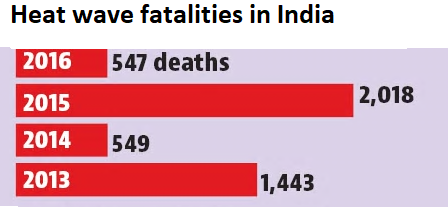
  • We humans are able to live day-to-day, individually or as communities, only within a rather narrow range of temperature.  This fact becomes more salient as the planet warms and weather patterns shift. A large percentage of the earth’s people live in tropical or temperate climate zones.  India has a population in excess of 1.3 billion and contains nearly a fifth of the world’s population.   It has seen six major droughts and drought-like situations in 10 of the last 17 years, devastating India’s farm economy.  The driving force for this unfortunate shift has been lower south-west monsoon rainfall.  Latest studies by the Indian Institute of Tropical Meteorology (IITM) show that average rainfall during the monsoon period is falling as the Indian Ocean gets warmer. For example, Chennai, a southeast Indian city of 10 million, receives most of its rainfall during the annual two-month autumn monsoon season. In recent decades, however, droughts have become more intense.  At the same time, temperatures have risen substantially during the hot months of the year. Air conditioning is a luxury; most people just have to sweat it out during the hottest periods. Water is so scarce in working-class neighborhoods of the city that the government has been forced to spend huge amounts of money to desalinate seawater, bring the water by train from hundreds of miles away, and distribute it from an army of water trucks into neighborhoods where household taps have been dry for months.  This is a city of 10 million people!  At the same time, the Indian government has documented hundreds of deaths due to extreme heat.

To add insult to injury,  despite the lower total rainfall there have been episodes of extreme downpour.

We in the US make up about 5% of the world’s population. Understandably, we tend to form judgments about global conditions from what we experience in our own country.  But what happens in India is more representative of the challenges facing most of humanity.  The more extreme climatic conditions seen in semi-tropical regions are in many cases portents of what is to come in our country.  All these episodic weather events are the products of secular changes in the planet’s climate, driven by increases in atmospheric greenhouse gases. 


  • What about the heat in the U. S.?  The Union of Concerned Scientists recently issued a report on the increasing number of extreme heat events all over the world, and particularly in the United States. Their projections, based on analysis of data covering decades and modeling of expected future weather patterns, shows that the U.S.faces a potentially staggering expansion of dangerous heat over the coming decades.  Dallas, TX , for example, has experienced 31 above 1000 degree days during 1971-2000.  It’s projected to experience 93 such days during 2036-2065 and 124 days during 2066-2099. The trend line suggests that in 2020 Dallas can expect to have perhaps 40 or so days of extreme heat, with all that implies for heat-related illnesses and fatalities, to say nothing of the huge demands for energy to operate air conditioning machinery. The body’s ability to survive at a temperature of 1000 depends on humidity and the availability of water to maintain hydration, but for the elderly and people in poor health, that level of heat is life-threatening.  The air conditioning and refrigeration needed to counter the heat waves consumes exceptionally large quantities of energy.  Episodic extreme heat events worldwide can be expected to increase in number and intensity as the planet continues to warm,  producing a vicious cycle of added energy consumption, thus amplifying the secular shift of global warming.   

  • Tropical forests globally are being lost at a rate of more than 60,000 square miles per year.  A global initiative to restore large swaths of forest,  termed the Bonn Challenge, was launched in 2011.  Countries were to make commitments to restore large areas of the world’s deforested and degraded land by 2020. Since then the goal regarding the area to be restored has been increased to about 1.3 million square miles by 2030.  That’s a lot of land, about twice the area of Alaska. Ideally, reforestation is a great pathway to mitigating the continued increases in carbon dioxide in the atmosphere. Forests are capable of soaking up carbon dioxide from the atmosphere. They can improve farmers’ lives in many parts of the world, improve drinking water quality, and provide increased habitat protection for wildlife.  So if the Bonn Challenge could be met, it would represent a significant effort to mitigate the secular change in greenhouse gas warming. 
    But as explained in a recent article in the journal Science, “many short term fixes fail to produce environmentally and socially beneficial long-term outcomes”. One of the most common missteps is to favor single-species tree plantations over restoring native forest ecosystems. This obviously has negative consequences for biodiversity and carbon storage, and typically works to the disadvantage of native populations.  Some nations have indeed planted a lot of trees on abandoned poor quality land or land not suited for food production, but much of the restoration involves using trees that are intended for harvesting at some point.  To maximize the benefits of restoration, trees must be left in place for longer times, encouraging diversity in the ground cover and promoting wildlife habitation.  Tearing up the Amazon rainforest to plant coffee trees or create a palm oil plantation is a step backward.  Done right, restored forests could sequester a significant amount of carbon dioxide and help limit global warming and enhance the lives of millions of people. On the other hand, a potentially great secular initiative could slip into being a disappointing episodic event. 

  • I have long been an avid follower of efforts to revolutionize agricultural practices globally.  It’s such an obvious place to begin making a serious dent in the rate at which greenhouse gases are being added to the atmosphere.  And this, after all, is the single most important factor in determining how disastrously our anthropocentric imprints on climate change turn out. Agriculture is the world’s largest industry. About a billion people are engaged in farming.  About half the world’s habitable land is pasture and cropland.  Agriculture is essential, and potentially the single most powerful force for improving the lot of humankind generally.  It’s also one of the worst polluting industries on the planet. Of course, there isn’t just one “agriculture”.  This so-called industry varies from pitiable scratching in unproductive ground to behemoths of midwest farmland, costing as much as $400,000 and more--and that’s just for the tractor!  

The huge diversity in agriculture, based on economic factors, the conditions of the land and a host of other climate-related factors, precludes any single approach to raising agriculture’s contributions confronting climate change. It is quite evident, however, that there is room for massive reforms in conventional farming in the US and many other developed nations. Those reforms come under the general heading of regenerative farming practice.  The conventional practices that have become dominant emphasize monocultures, plowing practices that result in topsoil erosion, and heavy use of pesticides and herbicides.  The big ag corporations love it, they’ve grown rich by making the farmers dependent on them.  But there are winds of change a blowin’.  Here’s one example:
One of the precepts of regenerative agriculture is to leave the land as undisturbed as possible.  No-till practices leave the soil able to develop deep root systems with cover crops, which form deep root systems and promote sequestration of water and carbon dioxide. Their roots produce nodules that fix nitrogen which feeds the crops, and holds the soil in place in heavy rainfall, reducing runoff. To read a nice story on how this is playing out in midwest farm country, check this link.   Cover crop acreage is still small, but it’s increasing rapidly. According to a U.S. Department of Agriculture census, cover crop acreage increased 50% nationally during 2012-2017.

As the prospect of global warming looms ever larger, more attention is being paid to how we can offset our current dependence on fossil fuels by switching to renewable energy sources.  There is great enthusiasm for many promising modalities, especially solar and wind, and including also technologies for energy storage which will be essential to sustaining a balanced system with massive capacity.  But I’m not beamish about many of the rosy scenarios being drawn.  California recently set a goal of carbon-free electricity by 2045. This is an ambitious goal.  It ‘s sobering to realize that, ambitious as it is, it does not address the transportation sector, which produces two-thirds of the state’s emissions.  I recently came across this quote on the web:

“Humanity is owed a serious investigation of how we have gone so far with the decarbonization project without a serious challenge in terms of engineering reality.”  
– Michael Kelly, Prof. Electrical Engineering, Cambridge 

The issue of how to get to a carbon-free economy, especially one that might not include nuclear energy, has not been satisfactorily addressed by people who should know how far we are from that goal.  It’s true that, to the extent they can be deployed, renewable energy sources are capable of mitigating the continued increases in greenhouse gases.  But their capacity to do that is actually less than what is achievable by implementing many of the solutions described in
Project Drawdown, a roadmap with which everyone should be familiar. 


Saturday, August 10, 2019

A New Way to Talk About Climate Change


This blog entry is about the status of the term "climate change" in public discourse. I began with a little searching to get a sense of how the term does or doesn't show up in discussions of natural disasters.  Here are a few results:

·    In March, 2019, Nebraska experienced record flooding. The Missouri, Platte and Elkhorn rivers all crested at record heights, breaking records set as recently as 2011. I watched videos of political figures such as Senator Jim Scheer commenting on what they’d seen during visits across the state.  To a person, they were solicitous, concerned, ready to go to Washington with requests for disaster relief. No one mentioned “climate change.”

·     People in California who lost their homes in raging fires over the past couple of years were often pictured as plucky, tough people, ready to rebuild. The attitude, certainly the implicit hope, is that the fires were an anomaly. “Fires happen”. Some said the government should have cleared out the underbrush.

·     The billions of dollars in damage along the gulf coast caused by hurricane Michael a year ago will be substantially covered through disaster relief from the Federal government. How much of that funding will be devoted to replacing structures and infrastructure that will suffer a similar fate when the next hurricane strikes? 


The idea of “climate change” as a secular shift in Earth’s climate, is not ensconced in the intellectual, moral or cultural spirit of our time.  Why is this so?  Why isn’t the nation preoccupied with the dire threats that scientific study tells us are posed by “climate change”? One part of the answer lies in federal government policies, which amount to something worse than lack of attention. The administration supports initiatives that would directly contribute to climate change; for example, leasing federal lands to fossil fuel extractors, and permitting drilling in areas where an earlier administration had closed it off.


In the early 1930s, when the Great Depression had tightened its grip and the economy was falling apart, Franklin Delano Roosevelt instituted a range of bold federal policies aimed at restoring confidence in banks and putting people back to work. He had to fight political enemies and economic conservatives every inch of the way, but in time people’s outlooks and expectations changed from despair to hope. It was the age of the New Deal. The arguments against the federal government addressing “climate change” are not unlike like those that were advanced by big business interests against FDR’s New Deal. They include the dictum that the government should not be involved in addressing such matters; the markets will make adjustments to changing conditions of whatever sort. Today, resistance to government-centered, comprehensive and socially just health care, or to reform of the criminal justice system, reflects the same thought patterns.  But how do markets actually work in addressing broad social needs? Businesses are for the most part profit-oriented and short-term in outlook.  There’s not much room for a broadly-based social welfare orientation. Though the private sector can be, and often must be, participating partners in government-funded and operated programs, it should not be counted upon to formulate and execute broad social programs.


On the other hand, the private sector can’t help but be involved in addressing a challenge that penetrates as deeply as climate change into the nation’s economic and social life. Unfortunately, a large swath of the corporate world doesn’t wish to accept that it has particular roles to play.  At a minimum, corporations should behave as good citizens (Corporations are now “citizens”, aren’t they?), conserving energy and adopting climate-friendly policies and practices.  Businesses involved with transportation or the technologies of energy generation must be involved; climate change impinges directly on their bottom lines. Then there are companies whose operations directly affect climate change by dint of the products being produced or the manner in which their operations are being carried out. Three big ones are fossil fuel production and consumption, mining, and land use and food production. The last of these promises great benefits from mitigating climate change, but industrial agriculture has shown little interest in abandoning its many destructive products and practices.   


Despite all the talking and writing about climate change, there is not enough public concern, enough impetus for action.  Which brings me back to the concept of the American zeitgeist, the intellectual, moral, or cultural spirit of our time.  I agree with George Lakoff that we must reconsider the ways in which climate change issues are framed.   We can start with the realization that support for needed change is limited by the public conceptions of “climate change” itself.  In January of this year, Yale University issued a report entitled Climate Change in the American Mind: December 2018, as part of the Yale Program on Climate Change Communication.  The report is a veritable blizzard of data relating to changes in beliefs and attitudes over the past several years regarding climate change. Here is a small sampling of the results:

·       Seven in ten Americans think that global warming is happening, up about 10% since March 2015.

·       Americans are increasingly certain that global warming is happening—51% are “extremely” or “very” sure, an overall increase of 14% since March 2015.

·       About 70% of Americans admit being at least “somewhat worried” about global warming. Of those, about 30% are “very” worried.

·       About seven in ten Americans say the issue of global warming is either “extremely”, “very” or “somewhat” important to them personally, while about three in ten say that it’s either “not too” or “not at all” important to them personally.

·       Fewer than half of Americans perceive a social norm in which their family and friends expect them to take action on global warming.

·       Only one in five Americans is aware that more than 90% of climate scientists have concluded that human-caused climate change is happening.


What can we do with this information?  The Center made an effort in 2014 to identify which messages on climate change were effective. Although the work was carried out several years ago, many of the results remain of interest.  One that stuck out for me is related to the last bullet point: when many of the subject groups were told that a high percentage of all climate scientists are in agreement that humans are contributing to climate change, the polarization between higher educated liberals and conservatives was reduced by nearly 50%.


These indications of how climate is perceived show that we’re far from having an informed public.  The fact is, people don’t really know what “climate change” is. Some ideas from philosophy and language theory have helped me understand why this is so.  Start with the fact that “climate change” is not a physical thing, like a tree or chair.  Rather, it’s a social construct, a term employed to reference a complex set of processes, occurring at many places and on different time scales, and jointly shared on the basis of shared assumptions.  Familiar examples of social constructs are “money”, “war”, or “human trafficking”.  Because such constructs are many-faceted, people don’t all have the same idea of what each one is. A man who served on desk duty in the Pentagon during World War II would have a different idea of “war” than a marine who’d gone ashore at Iwo Jima.


Nebraska has seen flooding before. It’s thus not obvious that a farming family in Nebraska experiencing flooding in 2018 would associate that event with a long-term trend of global scale when they know little of the underlying scientific consensus. How should ranchers in the southwest, where prolonged dry conditions are a natural part of life, view an especially dry spell? Records of the past based on ancient tree-rings indicate that at times the Southwest has experienced protracted droughts that lasted about 50 years, longer than the 1950s and 2000s droughts that caused economic losses to agriculture and ranching.  So it’s reasonable to ask whether we should look at recent weather patterns as symptomatic of climate change.  They may be, but historical records reveal that such episodes have occurred in the past.  As humans have multiplied and spread themselves over the planet, they’ve taken to living in places susceptible to episodic natural events: droughts, floods, earthquakes, tsunamis, tornados, extreme heat. Sheer population increases guarantee that episodic occurrences in the future will result in a larger loss of life and greater damage to the built environment.  They’ll be talked and written about in relation to climate change, but will the public arrive at better understandings of how the planet is changing long-term?  


The legendary philosopher of science, Thomas Kuhn, wrote: “What a man sees depends both upon what he looks at and also upon what his previous visual-conceptual experience has taught him to see.” That idea has been expressed in many different ways: we see what we know.  When the farmer and his family experience flooding in Nebraska, they know it from family history as something seen before. Our challenge is to convey climate change in a way that people are encouraged to see episodic events as part of larger sweeping changes of global scale that will eventually override the shorter-term variations to produce irreversible secular change. 


Secular changes are long-term and unidirectional. Climate scientists are quite sure that some changes in climate experienced in recent times are appearing for the first time in what we might call “modern” human history, extending back say 100,000 to 200,000 years. For example, the oceans are warming; they haven’t been this warm since the last interglacial warm period, about 129,000 to 116,000 years ago. That’s a secular change. Correspondingly ocean levels are higher than they have been since that long-ago period.  

Another secular change, a stark product of unprecedented warming, is shrinkage of the Arctic ice cap.  It is predicted that by mid-century it will disappear altogether during the summer months.  This is not an episodic event.  All the evidence suggests that the Arctic ice cap has been present year-round for the past 2.6 million years, long before there were any humans around to notice. Loss of Arctic ice has already produced noticeable year-by-year weather changes across the continents. More consequential changes are predicted to appear when the ice disappears altogether.


According to data from NASA’s Goddard Institute for Space Studies, the average global temperature on Earth increased by about 0.8° Celsius (1.4° Fahrenheit) since 1880.  The Arctic, however, has warmed 4 or 5 times that much, producing the shrinkage of Arctic ice we’ve just noted. In recent decades the relatively warmer Arctic air has also warmed the permafrost, a permanently frozen layer below the Earth’s surface. Permafrost consists of soil, gravel, and sand, bound together by ice. It covers much of the northernmost land.
Some of it extends quite deeply and has been there for centuries. The world’s permafrost is estimated to hold 1,500 billion tons of carbon, much of it as methane.  That’s about double the amount of carbon currently in the atmosphere. The more extended warming of the permafrost at deeper layers is a secular change, expected to cause releases of gases that will accelerate global warming.


The changes described in these examples are secular; long-term, consistent shifts with long-lasting effects. I believe that the best place to begin in communicating the reality of climate change is to talk about these big-picture, long-term, changes. For example, one could start with what scientists tell us about the oceans:  

·       Ocean levels are rising.  That secular change will lead to the disappearances of low-lying atolls in the south Pacific that have been inhabited for thousands of years, and by the end of the century will effectively inundate many coastal regions with large populations.

·       The ocean is warming. That secular change is producing episodic changes, such as more powerful hurricanes, and bleaching of coral reefs, which are vital to the ocean’s support of marine life.

·       The ocean is becoming more acidic because it’s absorbing the increasing amounts of atmospheric CO2.  That secular shift is affecting living systems, such as marine creatures with shells.  

The key is to stress that the most salient naturally occurring events, the ones that grab our attention, are episodic—they come and go.  They’re dramatic when they show up, and we can expect that they’ll likely happen again.  The secular changes come on gradually. They don’t announce themselves as abrupt or traumatic, but they’re the causative agents for more powerful and frequent episodic events. The secular changes are the quiet, big ones already mentioned, and these:

·       increases in greenhouse gases that will cause continuing warming of the planet.

·        continuing acidification and warming in the oceans described above.

·        declines in freshwater resources.

·        loss of arable land.

·        declines in species diversity that will affect food production and the quality of the planet’s ecosystems.


These shifts and related declines in the natural world threaten our survival on Earth.  Some are so far along that there will be no escaping their effects, but we can work to mitigate the changes and plan on how to deal with them. To save humanity from the worst of what is to come, we have to focus intently on what scientists are telling us, and start acting. 


Friday, July 26, 2019

It's getting later, day by day


Oh, Boy! What a Saturday morning this is turning out to be. I recently received a letter informing me that I’ve been selected to receive a nice recognition, to be announced in a couple of months. I thought of the letter after I’d been up for a while this morning, and it made me feel good. But a bit later I found that my printer was malfunctioning; it seems unable to print in simple black, though the cartridge is relatively new and properly HP-certified. OK, it's a short-term problem, I’m sure I can fix it. Little ups and downs such as these are not important in themselves, but they can get in the way of addressing larger concerns.
Such as flooding.  In America's heartland.

So, on to the hard stuff.

As I began looking through the day’s feeds, many having to do with climate change in one way or another, one of the first papers I ran across is a link to a paper by Daniel Rothman of MIT in The Proceedings of the National Academy of Sciences. Rothman is Co-Director of the Lorenz Center in MIT’s Department of Earth, Atmospheric and Planetary Sciences. We all know that the oceans are undergoing changes in temperate and acidity at unprecedented rates. If today’s human-induced emissions cross certain thresholds, as Rothman predicts they soon will, many marine ecosystems are likely to go extinct. The consequences may be just as severe as the Earth experienced during previous mass extinctions. We tend to lose track of the fact that 71 percent of the planet’s surface is covered with water. We should care about what goes on in those deeps.


 On the general subject of the oceanic environment, how about the runaway increases in Sargassum seaweed blooms along the coasts in Florida, the Caribbean and Mexico? The stuff stinks to high heaven and accumulates almost faster than it can be carted off. Check out the photo of a formerly pristine white sand beach in Cancun.   A likely driver of this massive new intrusion is an increase in nutrients flowing from the Amazon into the South Atlantic because more and more land in the Amazon is being converted to agriculture, with an attendant overuse of fertilizers. So we lose the carbon-sequestering power of the rainforest and gain a wholly new source of pollution. As they say, what goes around comes around…

My next read was a paper entitled "Sleepwalking Into Certan Catastrophe, or Awakening via Agroecology", by Steve McFadden. He referred to a UN report on the devastating consequences climate change could have for a large fraction of the world’s population. The looming threat of massive food shortages brought on by changing patterns of rainfall and temperatures all over the planet has food scientists thinking about agroecology, a stabilizing set of principles and practices for clean, just, and sustainable farms and food. Transformation of agriculture through agroecological techniques and principles could have profoundly beneficial impacts on land, workers, and food. But how do we get to actually making changes, to progressing beyond talking about what might be possible, to actually making the necessary moves? In the short term, large corporations such as BASF, Bayer, 3M, DowDupont, Archer Daniels Midland, Tyson Foods, Smithfield Foods, Exxon, Chevron and many more stand to lose a great deal in making many of the needed changes. Corporations hold great political power in the global economy. It will be difficult to constrain them from using it to maintain their short-term business models. If they had wise, informed models that look ahead, the way forward might come to light. An article not long ago in Bloomberg Business News about Tom Hayes, the new CEO of Tyson Foods gives hope that enlightened leadership can be found in the corporate world, but is there enough of it?

The obstacles to change extend beyond just giant corporations. How many owners of large tracts of farmland who farm using monocropping methods, with high tillage and heavy reliance on fertilizers and pesticides are prepared to change from the practices that have made them rich? The feeds I read from the world of agriculture have a lot to do with the politics of maintaining government bailouts in the wake of massive flooding, wholesale losses of animals from hurricanes and tropical storms. Extreme weather events of the past few years don’t seem to have brought about an acknowledgment that the current models of industrialized farming must change. The solution could lie in employing regenerative agriculture. True, the ag feeds are sprinkled here and there with mentions of cover crops, low-till and no-till, permaculture and so on. Farmers such as Gabe Brown, who has successfully used regenerative agricultural practices for many years have garnered a lot of deserved attention. But climate change is coming fast, and moves to confront the changes afoot have been pitifully small in relation to the continued increases in greenhouse gas emissions.


 In addition to the problems associated with plant agriculture, modern methods of raising animals for food, referred to as Concentrated Farm Animal Operations, CFAOs, are a great bundle of harmful effects on land and water, to say nothing of spoilage of the environment for anyone unfortunate enough to live in the vicinity of a CFAO. Instead of recognizing the negative impacts of these operations and enacting tough laws to curtail their operations, state legislators in many farm states are enacting barriers to law suits from affected neighbors. And by the way, the resistance to effective change comes from both sides of the political divide. House Agriculture Chairman Collin Peterson (D-Minn.) has resisted the progressive push for dramatic action on climate change, reflecting the industry's aversion to change and its wariness of the climate movement. "I think a lot of them would like us to quit farming," Peterson told POLITICO in January. 'Peterson the unimaginative farmer' apparently has an edge over 'Peterson the people’s servant'.

Those who live citified lives can easily be unaware of the pollution of rivers and underground water resources resulting from CFAO operations; of a steady erosion of soil quality that comes with frequent tilling, eventually leaving land devoid of native soil organic matter, no longer capable of supporting sustainable food production; of deforestation operations that permanently strip out whole regions of plants that were soaking up CO2 and thus serving to mitigate greenhouse gas emissions. They may not think of the huge quantities of CO2 that result from manufacturing fertilizers. Nor are they likely to dwell upon the folly of planting, harvesting and processing vast quantities of corn to produce ethanol as a gasoline additive. Ethanol is blended with petroleum gasoline in America in order to meet a federal government mandate known as the Renewable Fuel Standard (RFS) and its updated version, RFS2. The original rationale was the desire to support U.S. agriculture. The RFS currently requires that about 10 percent of all gas-engine fuel sold in the United States be ethanol. There is virtually nothing left of the original rationale other than making some rich farm landowners even richer.

These examples call attention to the fact that agriculture is a leading source of greenhouse gas emissions and the cause of much ecological damage. And because of the slow pace at which this realization is penetrating into the public consciousness, it seems unlikely that reforms will come on a sufficiently broad and timely scale. I’ve frequently called attention to the great book Drawdown, which spells out a list of 80 or more feasible steps that could be enacted on a sufficiently large scale to go far toward mitigating climate change. Agriculture is at the heart of many of the most important ones. We need to find ways to make change happen. The alternative is described in David Wallace-Wells’s book, The Uninhabitable Earth: Life After Warming. Check out this arresting interview with him.

The rapid-fire announcements of plans to achieve net-zero emissions by 2050 are exemplary of an unfortunate expectation that new technologies will be enough to save us from global warming. Any realistic analysis leads to the conclusion that it will take a lot more than achieving net-zero emissions. It will require revolutionary new approaches to using the planet’s landmass to produce food and serve as a sink for CO2 by revitalizing currently depleted and desertified land. We will have to massively reduce global consumption of animals as a food source, learn to budget the ever more limited freshwater resources—and so much more. Small steps are being taken in the developed nations, but it’s a constant battle to educate the public and prevail politically against those who refuse to surrender their short-term interests. On this particular morning, it’s not easy to be optimistic.